Regular HVAC maintenance prevents expensive emergency repairs during peak seasons
The difference between a $150 preventive maintenance visit and a $3,000 emergency repair often comes down to one thing: catching problems before they become crises. As property managers in Northwest Arkansas, we’ve seen this pattern repeatedly—small issues ignored become expensive emergencies, usually at the worst possible time.
Here are the five proactive maintenance tasks that consistently prevent emergency repairs, protect your property value, and save our clients thousands of dollars every year.
1. HVAC System Maintenance: The $150 Task That Prevents $5,000 Failures
Why This Matters
HVAC failures are the most common and most expensive emergency repairs we see in NWA rental properties. Systems typically fail during peak demand—the hottest week of summer or coldest snap of winter—exactly when you have guests booked and repair costs surge due to emergency service premiums.
The Real Cost of Reactive Maintenance:
- Emergency HVAC repair: $800-$3,000+
- Complete system replacement: $4,000-$8,000
- Lost rental income from guest cancellations: $500-$2,000
- Guest refunds and negative reviews: Priceless damage to reputation
- Emergency hotel accommodation for displaced guests: $300-$800
The Proactive Approach
Schedule bi-annual HVAC service:
- Spring service (March-April): Before cooling season begins
- Fall service (September-October): Before heating season begins
What professional service includes:
- Clean or replace air filters
- Clean condenser and evaporator coils
- Check refrigerant levels and look for leaks
- Inspect electrical connections and tighten if needed
- Lubricate moving parts
- Test thermostat calibration
- Clear condensate drain lines
- Inspect ductwork for leaks
Cost: $120-$180 per service visit
Annual investment: $240-$360
What it prevents: $3,000-$8,000 in emergency repairs or replacement
Between Professional Services: Monthly Filter Changes
Don’t wait for bi-annual service to address filters:
- Check filters monthly, especially during peak use seasons
- Replace when visibly dirty or every 1-3 months depending on use
- Use quality filters appropriate for your system
- Keep spare filters on-site for easy replacement
This simple task improves efficiency, reduces strain on the system, and prevents the most common cause of HVAC failure—restricted airflow from dirty filters.
Red Flags to Watch For
Between service visits, watch for warning signs that need immediate attention:
- Unusual noises (grinding, squealing, banging)
- Weak airflow from vents
- Inconsistent temperatures between rooms
- System cycling on and off frequently
- Higher than normal utility bills
- Moisture or water around the unit
Addressing these early prevents minor issues from becoming major failures.
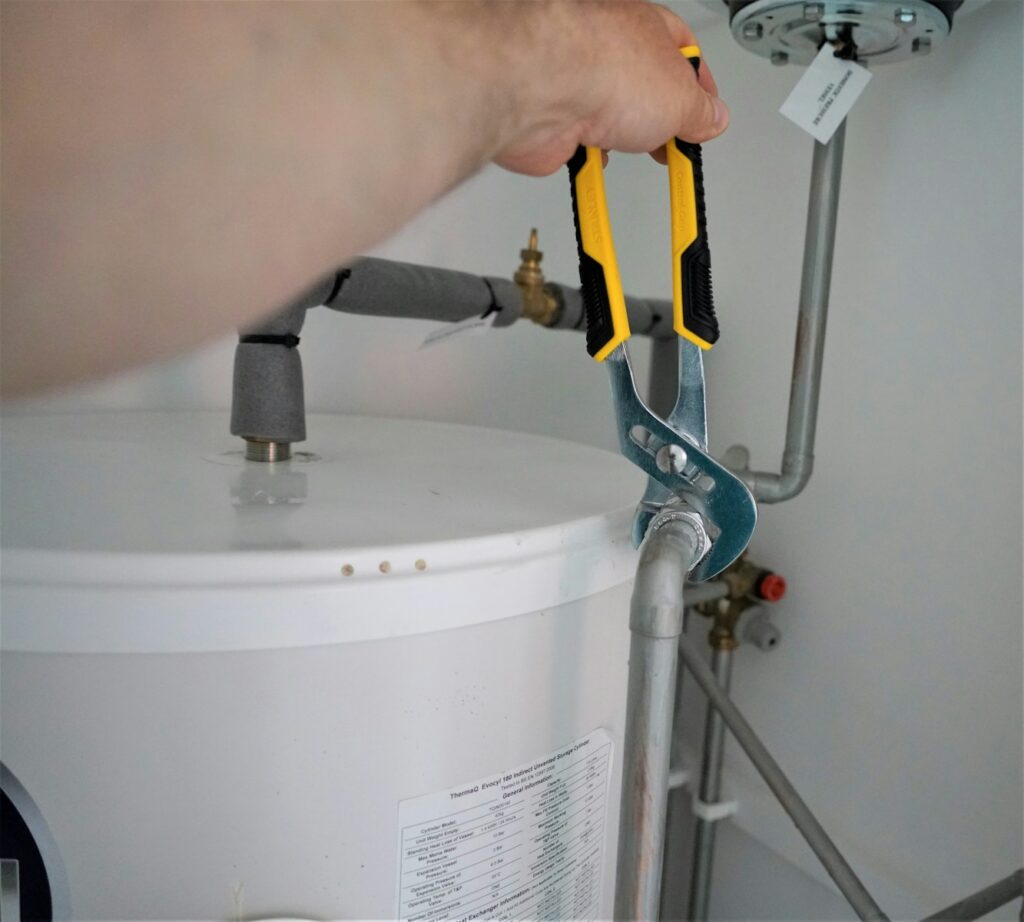
2. Water Heater Flushing: Prevent the 3 AM Flooding Call
Why This Matters
Water heater failures are catastrophic for two reasons: they often flood the property (causing extensive damage to floors, walls, and belongings), and they always seem to happen when guests are in the middle of their stay. We’ve never seen a water heater politely fail during a vacant period.
The Real Cost of Water Heater Failure:
- Emergency water heater replacement: $1,200-$2,500
- Water damage restoration: $2,000-$8,000+ (depending on extent)
- Guest displacement and refunds: $500-$1,500
- Lost bookings during repairs: $1,000-$3,000
- Damaged flooring, drywall, furniture: $3,000-$15,000
Total potential cost: $7,000-$30,000 from a single water heater failure.
The Proactive Approach
Annual water heater maintenance:
What to do:
- Flush the tank annually to remove sediment buildup that causes corrosion and reduces efficiency
- Test the pressure relief valve to ensure it’s functioning properly
- Check the anode rod (every 2-3 years) and replace when heavily corroded
- Inspect for leaks around connections, pipes, and the tank itself
- Adjust temperature to 120°F (prevents scalding and reduces mineral buildup)
- Insulate the tank if it’s in an unconditioned space (garage, basement)
Cost: $100-$150 for professional service, or DIY for ~$30 in materials
Annual investment: $100-$150
What it prevents: $7,000-$30,000 in catastrophic water damage
Know the Age of Your Water Heater
Water heaters have a finite lifespan:
- Traditional tank heaters: 8-12 years
- Tankless heaters: 15-20 years
If your water heater is approaching the end of its expected life, replace it proactively rather than waiting for failure. The cost difference between planned replacement and emergency replacement (plus water damage) is enormous.
Install a Water Alarm
For $20-40, install a water leak detector near the water heater. These battery-powered devices alert you to leaks before they become floods, giving you time to shut off water and address the issue before extensive damage occurs.
3. Gutter Cleaning: The Overlooked Task That Causes Foundation Damage
Why This Matters
Clogged gutters seem minor until you understand the chain reaction they trigger: water overflows, saturates soil around the foundation, causes foundation cracks or settling, leads to basement flooding or structural issues, and results in massive repair bills.
In Northwest Arkansas, we get plenty of rain—and when gutters can’t do their job, that water goes exactly where you don’t want it: against your foundation.
The Real Cost of Neglected Gutters:
- Foundation repair: $5,000-$25,000+
- Basement waterproofing: $3,000-$10,000
- Fascia and soffit repair (from water damage): $1,500-$6,000
- Roof damage from ice dams (water backs up under shingles): $2,000-$8,000
- Landscape erosion repair: $1,000-$4,000
The Proactive Approach
Clean gutters twice annually:
- Late fall (November): After leaves have fallen
- Early spring (March-April): After winter debris and before heavy spring rains
What proper gutter maintenance includes:
- Remove all leaves, debris, and buildup from gutters
- Flush downspouts to ensure they’re not clogged
- Check for proper slope (gutters should slope toward downspouts)
- Inspect for loose or damaged hangers/brackets
- Look for rust, holes, or separating seams
- Ensure downspouts direct water at least 5 feet from foundation
- Consider gutter guards to reduce future cleaning needs
Cost: $100-$250 per cleaning (depending on home size and height)
Annual investment: $200-$500
What it prevents: $5,000-$40,000+ in foundation and water damage
The Downspout Extension Addition
While cleaning gutters, add downspout extensions if they’re not already present. These $15-30 accessories direct water well away from your foundation, dramatically reducing water-related foundation issues.
Special Consideration for Properties with Trees
If your property has large trees nearby (especially oak or maple), you may need quarterly gutter cleaning instead of twice annually. The additional $200-300 yearly investment is still cheaper than foundation repairs.
4. Plumbing Inspections: Find Small Leaks Before They Become Big Problems
Why This Matters
Small plumbing leaks are insidious. They hide behind walls, under sinks, and in crawl spaces, slowly causing water damage, mold growth, and structural rot. By the time they’re obvious, the damage is extensive and expensive.
In rental properties (especially vacation rentals with high turnover), plumbing gets heavy use and wears faster than owner-occupied homes.
The Real Cost of Undiscovered Leaks:
- Mold remediation: $2,000-$8,000
- Drywall and structural repair: $1,500-$5,000
- Flooring replacement: $2,000-$8,000
- Pipe repair or replacement: $500-$3,000
- Water bill from constant leak: $50-$200 monthly until discovered
- Health issues/liability from mold exposure: Potentially unlimited
The Proactive Approach
Quarterly plumbing inspections:
What to check:
- Under all sinks: Look for moisture, stains, or active drips from supply lines and drain connections
- Toilet connections: Check supply line, tank bolts, and base seal for leaks or moisture
- Water heater: Inspect connections, pressure relief valve, and look for corrosion or moisture
- Washing machine connections: Inspect hoses for cracks, bulges, or leaks (replace hoses every 3-5 years)
- Outdoor faucets: Check for leaks and ensure they’re properly winterized in cold months
- Water meter: Turn off all water use and check if meter is still running (indicates leak somewhere)
- Water pressure: Test pressure (should be 40-80 PSI; higher pressure causes premature wear)
- Visible pipes: Look for corrosion, mineral deposits (indicating past leaks), or unusual moisture
Cost: $0 for DIY inspection, $100-$150 for professional plumber inspection
Annual investment: $0-$600 (depending on DIY vs. professional)
What it prevents: $5,000-$25,000 in water damage and mold remediation
The Simple Toilet Test
Toilet flappers wear out every 3-5 years but fail silently, wasting hundreds of gallons of water monthly:
- Add food coloring to the toilet tank
- Wait 15-20 minutes without flushing
- Check bowl for colored water
- If color appears, flapper is leaking and needs replacement ($5-15 part, 10-minute DIY fix)
Do this test every 6 months. It’s saved our clients hundreds in water bills and prevented guest complaints about constantly running toilets.
Replace These Proactively on a Schedule
Don’t wait for these to fail:
- Washing machine hoses: Every 3-5 years (upgrade to braided steel hoses for $30-50)
- Toilet flappers: Every 3-5 years ($5-15 each)
- Faucet aerators: Clean annually, replace when flow decreases
- Supply line hoses: Every 5-7 years for braided steel, immediately for rubber
5. Roof and Exterior Inspections: Protect Your Biggest Asset
Why This Matters
Your roof is your property’s primary defense against the elements. A small roof issue—a few missing shingles, a cracked flashing, a clogged valley—becomes a catastrophic leak that damages everything below it.
Northwest Arkansas weather is tough on roofs: summer heat, winter ice, severe storms, and significant temperature swings all accelerate roof wear.
The Real Cost of Roof Neglect:
- Emergency roof repair during active leak: $800-$3,000
- Interior ceiling and wall repair from water damage: $2,000-$8,000
- Attic mold remediation: $2,000-$6,000
- Insulation replacement (damaged by water): $1,500-$4,000
- Full roof replacement (when small issues spread): $8,000-$20,000
- Guest displacement and lost revenue: $1,000-$5,000
The Proactive Approach
Annual roof and exterior inspection:
What to inspect:
Roof:
- Missing, damaged, or curling shingles
- Cracked or deteriorated flashing (around chimneys, vents, valleys)
- Granule loss on shingles (indicates age/wear)
- Moss or algae growth (more common on north-facing slopes)
- Sagging areas (indicates structural issues)
- Damaged or missing ridge caps
- Condition of roof vents and boots
Gutters and Downspouts:
- Proper attachment to fascia
- Correct slope toward downspouts
- No separated seams or holes
- Downspouts firmly attached and directing water away
Exterior:
- Cracks in foundation or siding
- Deteriorated caulking around windows and doors
- Wood rot on trim, fascia, or siding
- Peeling paint (can indicate moisture problems)
- Damaged or missing weather stripping
- Cracks in driveway or walkways (trip hazards, water channels toward foundation)
Cost: $150-$300 for professional roof inspection
Annual investment: $150-$300
What it prevents: $10,000-$40,000 in roof replacement and water damage
Best Time for Inspection
Schedule roof inspections in late spring or early fall:
- Weather is mild (safer for inspector)
- You have time to address issues before severe weather seasons
- Contractors are less busy than summer (better pricing, faster scheduling)
After Severe Weather: Bonus Inspections
After severe storms, hail, or high winds, do a visual check from the ground:
- Look for obvious damage or missing shingles
- Check for debris accumulation in valleys or gutters
- Inspect interior ceilings for water stains
If you see anything concerning, schedule a professional inspection immediately. Storm damage gets worse quickly.
Creating Your Proactive Maintenance Schedule
Here’s how to organize these tasks into a manageable annual calendar:
Quarterly Tasks (Every 3 Months)
- Change HVAC filters
- Plumbing inspection (check under sinks, toilets, water heater)
- Test smoke detectors and carbon monoxide detectors
- Check outdoor areas and landscaping drainage
Spring Tasks (March-April)
- Schedule HVAC service for cooling season
- Clean gutters and check downspouts
- Roof and exterior inspection
- Inspect and service outdoor equipment (lawn mower, trimmer)
- Check irrigation system (if applicable)
Summer Tasks (June-July)
- Deep clean dryer vents
- Inspect deck/patio for loose boards or safety issues
- Service hot tub (if applicable)
- Touch up exterior paint if needed
Fall Tasks (September-October)
- Schedule HVAC service for heating season
- Flush water heater and inspect anode rod
- Clean gutters (again, after leaves fall)
- Winterize outdoor faucets and irrigation
- Inspect weather stripping on doors and windows
- Check attic insulation and ventilation
Winter Tasks (December-January)
- Check for ice dams on roof
- Ensure proper heating system operation
- Inspect basement/crawl space for moisture
- Review year’s maintenance records and plan next year

The Math: Proactive vs. Reactive Maintenance
Let’s look at the actual annual costs:
Proactive Maintenance Annual Investment
- HVAC service (2x): $300-$360
- Water heater flush: $100-$150
- Gutter cleaning (2x): $200-$500
- Plumbing inspections: $0-$600 (DIY vs. pro)
- Roof inspection: $150-$300
Total Annual Investment: $750-$1,910
Average Emergency Repair Costs (When Issues Are Ignored)
- HVAC emergency: $2,000-$8,000
- Water heater failure + damage: $7,000-$30,000
- Foundation issues from gutters: $5,000-$25,000
- Plumbing leak damage: $5,000-$25,000
- Roof leak damage: $10,000-$40,000
Potential Emergency Costs: $29,000-$128,000
Even if proactive maintenance only prevents ONE major emergency over 5 years, you’re still ahead by thousands of dollars—and you avoid the guest displacement, negative reviews, and stress that come with emergency situations.
Why Professional Property Management Makes Sense
Implementing this proactive maintenance schedule requires:
- Calendar management and scheduling
- Vendor relationships and coordination
- Property access for inspections and service
- Knowledge to spot warning signs
- Time to manage the process
For out-of-state owners or owners with multiple properties, professional property management ensures these critical tasks happen on schedule. The management fee typically pays for itself through:
- Preventing expensive emergency repairs
- Vendor discounts from established relationships
- Early problem detection that reduces repair costs
- No guest disruption or lost revenue from preventable emergencies
At B Home Management, proactive maintenance isn’t an upsell—it’s how we protect your investment and avoid the 3 AM emergency calls that reactive management creates.
Want Proactive Property Management That Prevents Problems?
Schedule a consultation with B Home Management. We’ll create a custom maintenance plan for your property and show you how proactive care protects your investment while saving money long-term.
We manage properties the way we manage our own—because we own them too. That means fixing problems before they become emergencies.
Schedule Your Property Assessment
About B Home Management
B Home Management specializes in proactive property management for short-term and long-term rentals throughout Northwest Arkansas. Our maintenance-first approach prevents emergencies, protects property values, and keeps guests happy—because we manage your property with the same care we give our own.